
I'm a Psychologist. I Tested the App That Says a Calm Mind Is the Missing Piece in Learning English.

I have spent years studying how the brain learns. I am also still learning English myself. So I tried Wordletic, the app built around a simple idea: prepare your mind first, and the English you learn sticks.
Wordletic — an English language learning app — makes an interesting claim.
That your trouble speaking English isn't linked to the effort you put into learning.
Instead, it's more to do with the state of your mind while you study.
You can pile on new vocabulary for months and still watch most of it slip away. Or lock up the moment you try to speak.
What is missing is not effort. It is a calm, focused state of mind.
That's the thing that lets new words settle in properly and come out when you need them.
As a psychologist, I am trained to be skeptical of claims like this. They are easy to make and hard to prove. So I came to Wordletic as a doubter.
But I had a personal reason to try it. I am still learning English myself. And I often struggle with speaking.
What if the problem was never how hard I studied — but the mental state I was in when I did?
So I decided to test the app myself and find out.
First, some background on me
My work is the study of how the mind takes in new information. And why so much of what we learn fades before we can use it.
The irony is that I stalled too. English is not my first language.
For years, I could read it comfortably, write it well enough, and understand almost everything I heard.
But speaking was a different matter. The instant I had to talk, my mind would empty.
You may recognize the feeling
You are in a meeting or on a call. Someone turns to you with a question. You understand it completely, and you know the answer.
Yet in that moment, something locks. The English will not come, and you are left smiling, nodding, waiting for the moment to pass.
Afterward, alone, the words return without effort. They were there the whole time.
The big idea behind Wordletic
We absorb language in two very different ways.
The first is deliberate study. Sitting down to memorize rules, drill vocabulary, and repeat exercises. But it builds knowledge you have to actively recall.
That means pausing, thinking, and translating in your head before each word comes out. And if you are speaking English, that's just too slow.
The second way is far more natural. It is how children learn. They do not analyze grammar; they listen, relax, imitate, and let the language settle in on its own.
So when the moment comes to speak, the words are just there.
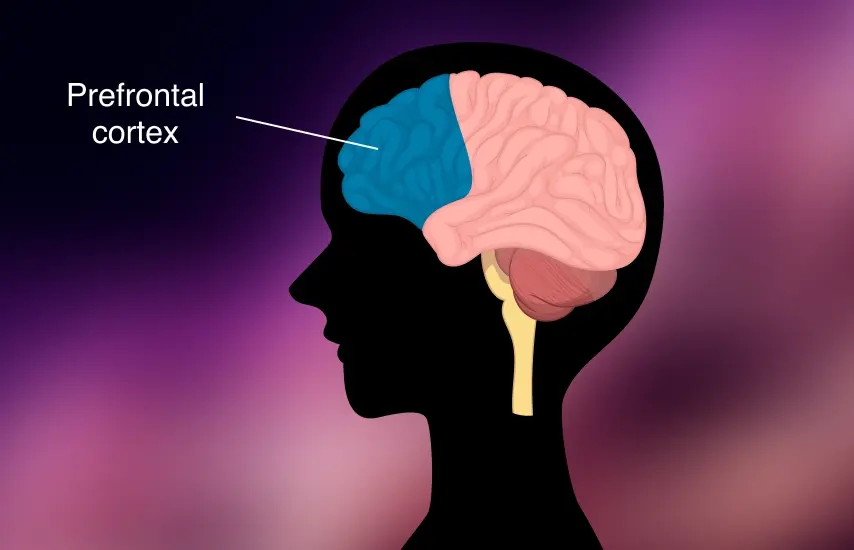
Wordletic is designed around that second, more natural path.
Before each lesson, it leads you through a short, calming warm-up. The aim is simple: to settle your mind first, so it is open and ready before any learning begins.
The warm-up is based on a technique called Ericksonian hypnosis. This is nothing like the hypnosis of television and stage shows. It is much closer to guided meditation. You remain fully awake and fully in charge the entire time.
It has been discussed by institutions such as Stanford Medicine, the Mayo Clinic, and the American Psychological Association.
What is Wordletic like to use?
It is refreshingly simple. You put on your headphones and begin a short session, usually ten to fifteen minutes. A calm voice guides you through the warm-up. And from there, you move into the lesson itself.
The method follows three stages:
- Prepare the mind. The warm-up helps you relax and focus.
- Learn the language. You take in words and grammar through real situations, not lists.
- Speak with confidence. You practice speaking in a safe, low-pressure setting.
How Wordletic compares to other apps
| Most language apps | Wordletic |
|---|---|
| ❌ You study while tired or distracted | ✅ You learn in a calm, focused state |
| ❌ Endless drilling | ✅ Real language in real situations |
| ❌ Words taught on their own | ✅ Words taught where you would use them |
| ❌ You stay afraid of mistakes | ✅ You practice safely, the fear removed |
| ❌ Words fade fast | ✅ The words stick |
What started to change for me
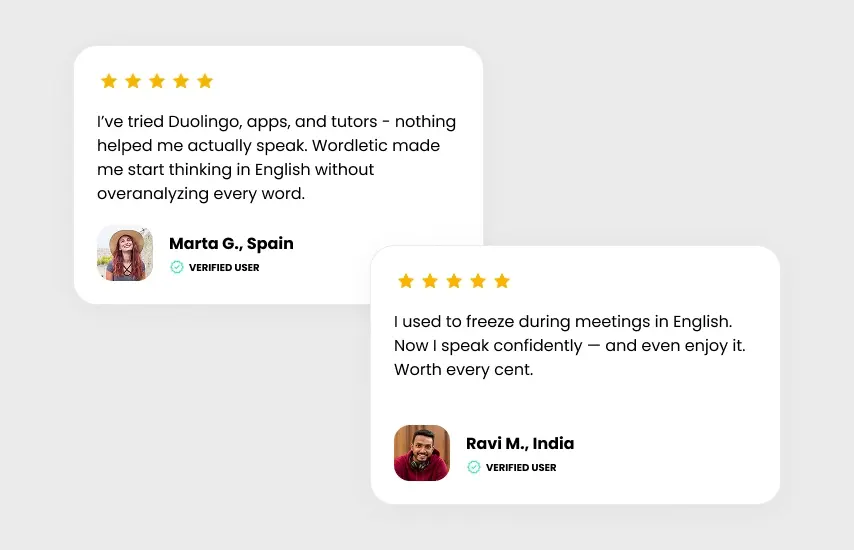
After a couple of weeks, something opened up. One afternoon, I caught myself thinking in English, with no translation step in between. The words were simply there.
A few days later, I spoke up in a meeting. And, for the first time I could remember, the words came easily. I felt fluent and confident.
What the numbers say
- 100,000+ active learners worldwide
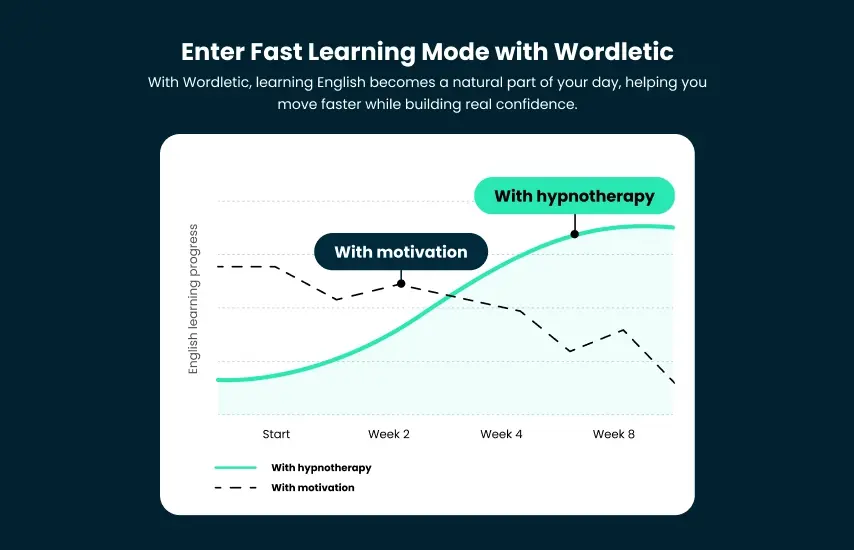
- 96% of learners report improvement within 4 weeks
- 2× better long-term vocabulary retention vs traditional apps
- 80% feel more confident speaking after a few weeks
- 95% reported success rate
How to start
Wordletic begins with a short quiz — around three minutes. It asks about your level, your goals, and the things you find most difficult. Then, it builds a plan around your answers.
You can get 50% off if you sign up for a 3-month plan. And there is a 30-day money-back guarantee, so there is no risk in trying it.